We’ve all been there: the heart-sinking moment you move a dining chair or drop a heavy kitchen pot, only to find a jagged white scar across your beautiful hardwood floors or heirloom oak table. Before you call a professional refinisher or spend a small fortune on industrial wood fillers, look no further than your child’s art bin. The humble wax crayon is the secret weapon of savvy DIYers and antique restorers alike.
Why does this work so effectively? High-quality crayons are primarily made of paraffin wax and concentrated pigment. When applied to a scratch, the wax fills the physical void, while the pigment mimics the wood’s natural grain. It is a solution that is both durable and remarkably forgiving.
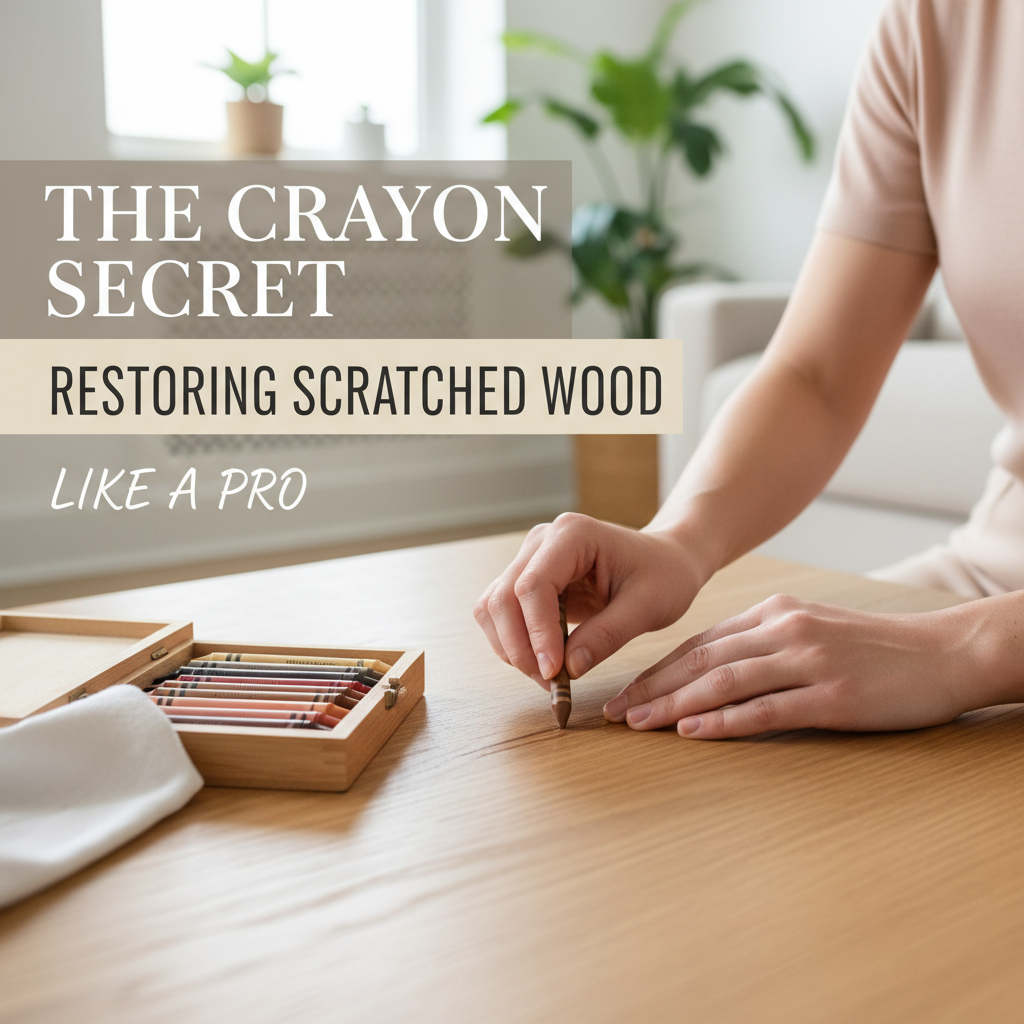
To begin, find a crayon that matches the lightest tone of your wood’s grain. If you have a variety of shades, you can even layer them to create a custom blend. Rub the crayon firmly over the scratch, moving perpendicular to the direction of the gouge, until the wax builds up and fills the indentation. You should see a slight mound of wax sitting just above the surface.
Now, here is the professional touch that ensures the repair lasts: grab your hair dryer. Set it to a medium-heat setting and hover it about six inches above the repair for thirty seconds. As the wax softens, it bonds with the wood fibers and settles into every microscopic crevice. Once the wax looks slightly glossy and “melted,” take an old credit card or a plastic putty knife and gently scrape away the excess, leveling it perfectly with the floor or tabletop.
Finish by buffing the area with a soft microfiber cloth using circular motions. The heat from the friction will polish the wax to a subtle sheen that mimics the surrounding finish. In less than five minutes, that glaring gouge will vanish into the background, leaving your home looking pristine once again.
This hack works because it addresses the two main issues of wood damage: depth and color. While store-bought touch-up markers only dye the wood, the wax actually replaces the lost material. It’s a simple, low-cost way to maintain the character of your home without the stress of a major renovation. So, the next time life leaves a mark on your mahogany, remember that the solution might just be hiding in a box of sixty-four colors.