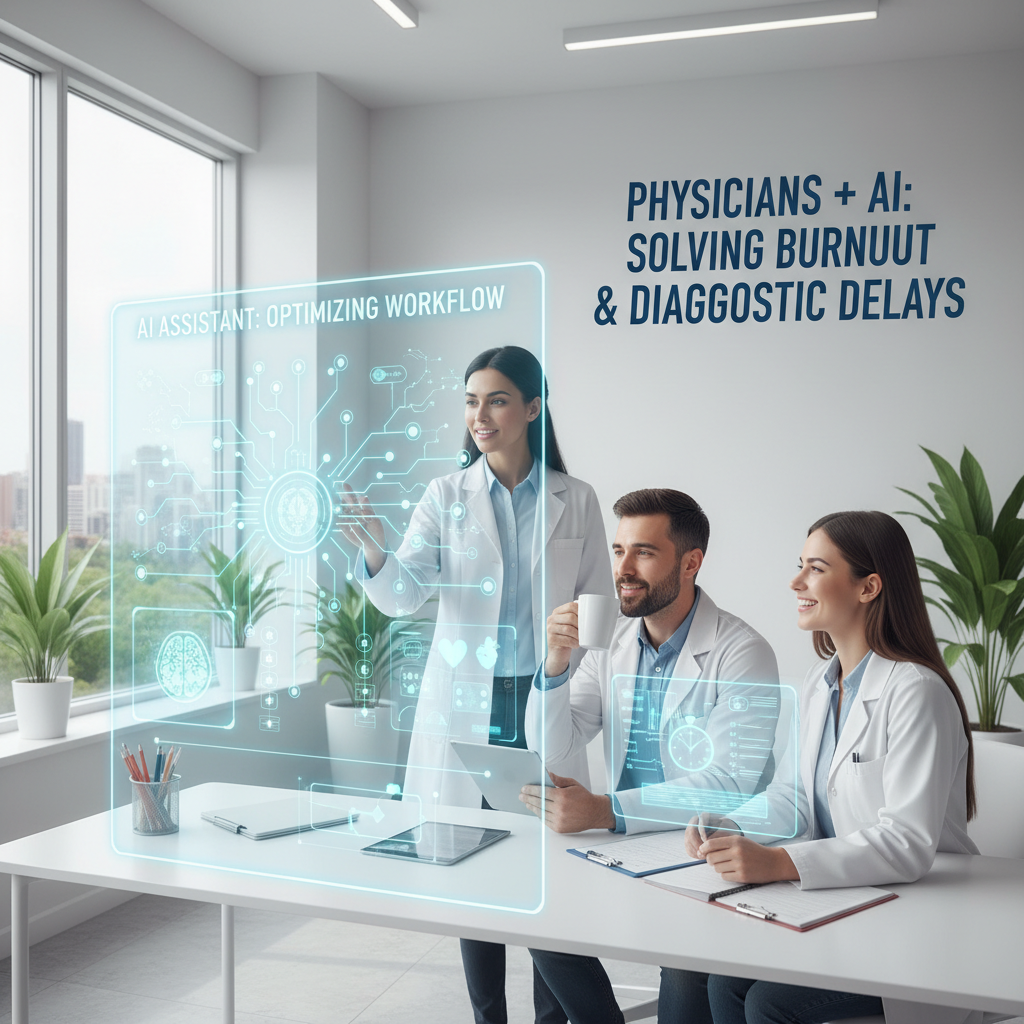
Across the nation’s leading medical centers, a new participant is making rounds, though it carries neither a stethoscope nor a clipboard. The integration of generative artificial intelligence into clinical workflows has transitioned from a speculative venture into a tangible transformation of the American healthcare system. This month, several major health networks, including Mass General Brigham and the Cleveland Clinic, announced expanded pilot programs for AI “co-pilots” designed to draft patient notes and analyze complex medical histories in real-time.
The shift comes as the medical community grapples with a deepening burnout crisis. Current data suggests that for every hour spent with a patient, physicians spend nearly two hours on administrative tasks—a phenomenon often referred to as “pajama time” when performed after hours. The new software, built on sophisticated large language models (LLMs) tailored specifically for medical terminology and privacy requirements, aims to reverse this ratio. By ambiently listening to patient-doctor consultations, these systems can generate high-accuracy clinical summaries, allowing the physician to maintain eye contact with the patient rather than a computer screen.
A significant milestone was reached last week when a peer-reviewed study published in *The Lancet* demonstrated that these AI systems could synthesize thousands of pages of disparate historical data to flag potential rare disease indicators that human clinicians had overlooked. This capability represents a shift from “administrative AI” to “diagnostic support,” marking a new frontier in how technology intersects with clinical judgment.
However, the rapid deployment of these tools has sparked a rigorous debate over safety and transparency. Bioethicists and regulatory bodies, including the Food and Drug Administration, remain focused on the “black box” nature of certain algorithms. The primary concern is the risk of “hallucinations”—instances where the AI generates plausible-sounding but medically incorrect information. To mitigate this, hospitals are implementing “human-in-the-loop” protocols, mandating that every AI-generated note or suggestion be verified and signed off by a licensed professional.
“The objective is not to replace the intuition and empathy of a trained physician,” said Dr. Aris Nikolas, a lead researcher in medical informatics. “It is to strip away the digital burden that has come to define modern medicine.” As these tools move from experimental sandboxes to the bedside, the medical field faces its most significant evolution since the introduction of the electronic health record, promising a future where technology serves as a bridge, rather than a barrier, to patient care.