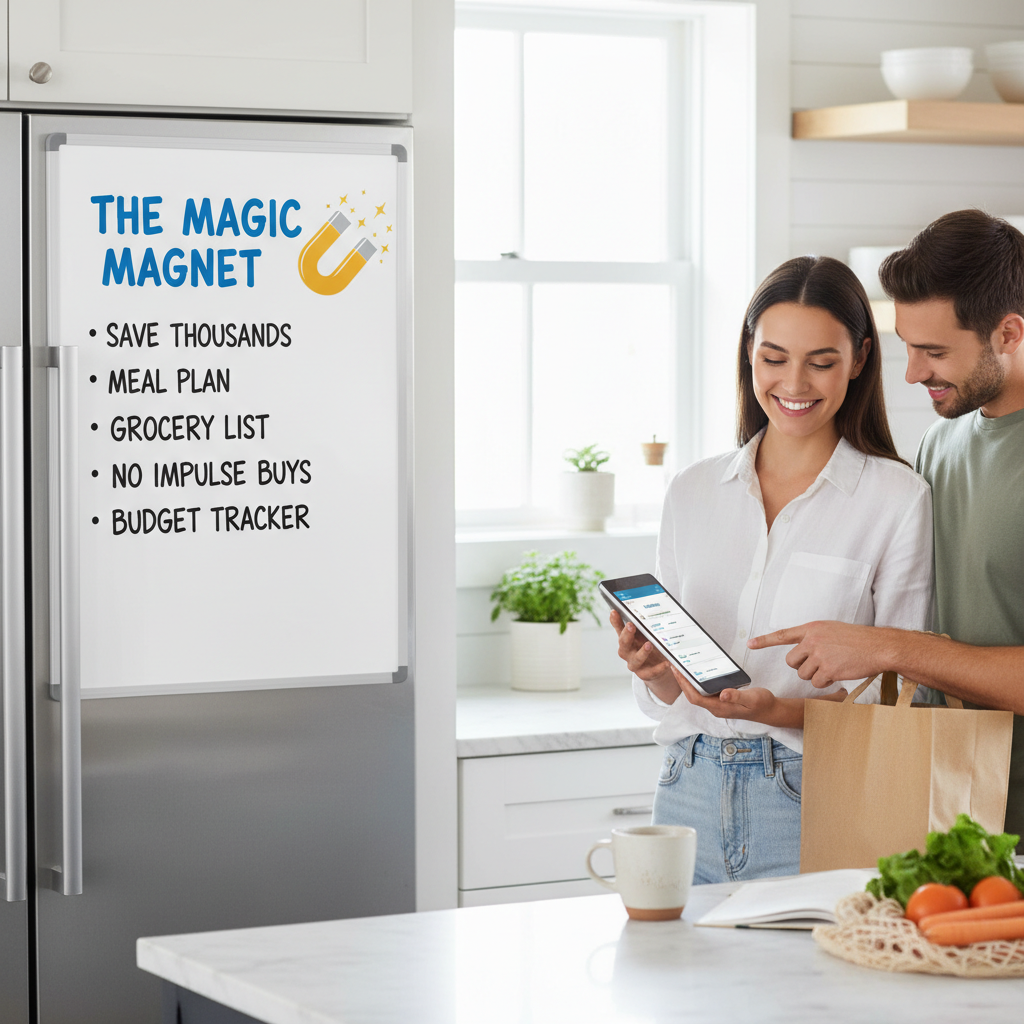
We’ve all been there: a sleek new gadget or a trendy pair of shoes catches your eye online, and suddenly, your carefully planned budget feels more like a suggestion than a rule. In the world of personal finance, we call this the “impulse itch.” It’s a momentary surge of dopamine that convinces us we need something immediately. But there is a simple, analog tool that can help you scratch that itch without spending a single dime: the 30-Day “Wanted” List.
To start, take a simple magnet and a notepad and place it right on your refrigerator—the natural crossroads of your home. The rule is deceptively simple: If you see something you want that isn’t an absolute necessity (like groceries or medicine), you must write it down on the list along with the date you first desired it. Then, you walk away. You aren’t allowed to purchase that item for exactly thirty days.
Professional organizers and financial planners often talk about “cooling-off” periods, but this list takes it a step further by transforming a fleeting impulse into a documented goal. There is a psychological magic at play here. Research suggests that the human brain often receives a similar “reward” from the act of planning a purchase as it does from the purchase itself. By writing it down, you are acknowledging the desire without the financial hangover.
The real thrift, however, happens during that 30-day waiting period. While the item sits on your list for its month-long probation, you gain the luxury of time. You can “shop your own house” first to see if you already own a forgotten alternative. If the need persists, you now have four weeks to scour local thrift stores, browse Facebook Marketplace, or wait for a predictable holiday sale. You’d be surprised how often a $100 “must-have” gadget appears for $15 at a yard sale once you’ve slowed down enough to look for it.
By the time the 30 days are up, one of two things usually happens: either the desire has evaporated entirely, saving you money and closet clutter, or you’ve confirmed that the item is a truly worthy investment. Either way, you have regained control of your wallet. In a digital world designed to make us click “Buy Now,” the Magic Magnet reminds us that the best things in life—and the best bargains—are always worth the wait.